



A site inspection only works if you know what you're looking for. Here's what to check at every venue visit, so your final decision is an easy one.
Rather have someone else manage it? That's what we do.
Quick summary.
| Topic | What to know |
| Before you visit | Get clear on your event goals, agenda, attendee count, number of days, and any special program elements before you ever step foot in a venue. |
| What to evaluate | Your checklist should cover six main areas: lobby and public space, staff, meeting space, back of house, guest rooms, and security. |
| First impressions | How the venue feels when you walk in is real data. If something feels off, trust it, because your attendees will feel it too. |
| Red flags to watch | Unaccommodating or disengaged staff, poor maintenance, and disorganized back-of-house areas are all signs worth taking seriously. |
| How many venues to tour | Narrow your site visits down to four to six venues so you have enough time to evaluate each one thoroughly. |
| Who leads the tour | You'll typically be guided by the hotel's sales manager. Once you book, you transition to working with their client services manager. |
| When to bring in help | GoGather sends RFPs, vets proposals, and narrows down options before any site visit happens, so you're only touring venues that already meet your criteria. |
Related: Looking for the best agency to partner with? Here's a list of the top 10 global event management agencies you'll want on your radar.
The importance of a site inspection checklist.
When it comes to event planning, selecting the right venue can make or break your event.
This means visiting multiple sites and creating a comparison checklist that includes:
- The level of cooperation/ compatibility with the venue
- Alignment with your vision
- Suitability for the event program's flow
- Adequacy of meeting spaces
- Evaluation of the geographical location (whether it's near a bustling downtown or close to key landmarks)
For example, we recently conducted five site inspections with a client in Nashville, Tennessee.
They were looking for a venue that was situated downtown and close to fun activities. We chose venues that fit the client’s criteria and then toured the locations. Using our comprehensive site inspection checklist, we were able to compare all five venues and chose the one that best fit the client’s vision.
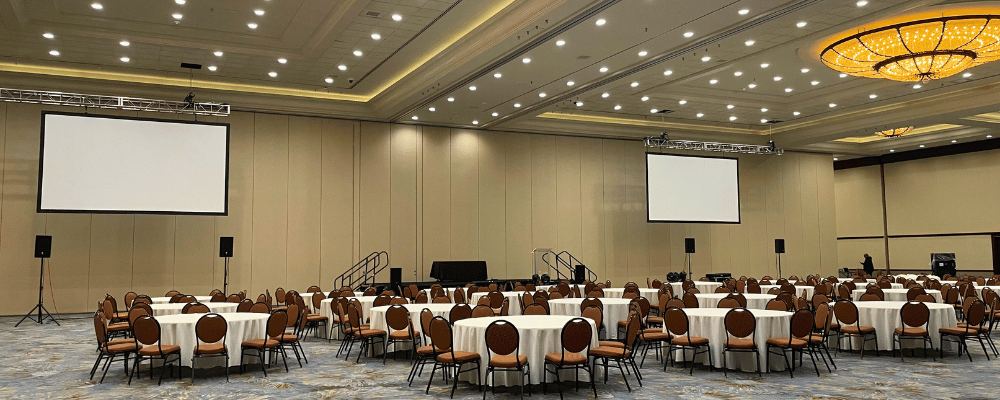
First: understanding your needs.
The biggest misconception about event planning is that you need to book your venue first.
Many companies believe they should prioritize finding a venue, but this approach is actually counterproductive to your event planning. It's more effective to seek a venue that aligns with your agenda rather than trying to force-fit the agenda into a venue.
Your site selection search should be secondary to understanding your:
- Goals
- Agenda
- Vision
- Basic numbers (how many people, how many days, how many sessions)
- Any key elements such as team-building, gamification, give-back events, or large activations that you want within your agenda
“When I’m going on a site visit, I’m walking the space as if I’m an attendee and seeing what the space feels like from their perspective.” - Leslie Tarborga, Director of Operations at GoGather
Related: Looking for more hands-on help? Here's a list of the best meeting management companies to consider.
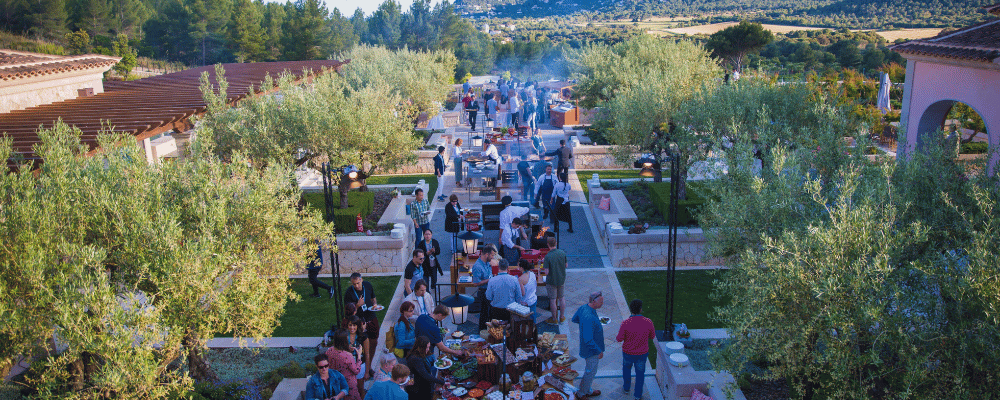
Second: conducting the site visit.
Once you know what you need from your venue, it's time to prepare for the site inspection. For us, creating a connection with the venue sales manager is the first step. This ensures the venue grasps our client's needs and can guide the tour accordingly. GoGather's site selection process starts well before the site visit. We send RFPs, vet proposals, and narrow down options so you're only touring venues that already meet your criteria.
It also doesn’t hurt to have some overarching goals in mind in addition to your site inspection checklist.
Here are some overall goals to guide your site inspection:
- Evaluate service
- Begin relationship building
- Determine points of negotiation
- See if the hotel has the right size meeting space
- Determine the right "fit" - look and feel, service, product, culture
- Determine if the hotel has the right style and amount of guest rooms
Want to create a trip that drives real performance? Read this article about the top incentive travel companies.
Related: How to choose the right destination for your incentive travel program.
Your ultimate site inspection checklist.
Now that you're prepared for your site selection, use this site inspection checklist to ensure you're watching out for the right things during your tour.
Click here for the printable version of the entire site inspection checklist.
Hotel lobby/ public space |
Yes/No | Comments |
Are the check-in staff welcoming and assisting/asking questions as you walk by?Check-in staff are the first point of contact your attendees will have with the venue, making their attitude and attentiveness a strong indicator of the overall service culture. During your walkthrough, note whether staff acknowledge you without being prompted. eye contact, a greeting, an offer to help. |
||
Is there good flow to guest elevators and function space?Poor flow between the lobby, elevators, and meeting spaces creates frustration at scale. what feels like a minor inconvenience during a quiet site visit becomes a real bottleneck when 300 attendees are trying to get to a general session at the same time. Walk the route yourself as if you're an attendee who doesn't know the property. Confusing layouts, narrow corridors, or elevators that are hard to find are all red flags worth noting. |
||
Are there seating areas in the public space where people can go to talk or make calls?Corporate events generate a lot of informal conversation, side meetings, phone calls, impromptu debrief sessions. If the lobby lacks comfortable, semi-private seating areas, those interactions get pushed to guest rooms or outside, which fragments the attendee experience. Look for a variety of seating configurations, not just a row of chairs along a wall. |
||
Are the restrooms sufficient in size if the hotel is full?Restroom capacity is one of the most overlooked logistics items during a site visit, but it becomes immediately obvious during a break when 200 people exit a general session at the same time. Check the number of stalls relative to your expected attendance, and note whether restrooms are conveniently located near your primary meeting spaces. |
||
Are there outdoor areas that are easy to get to for smokers/if someone wants air?Multi-day conferences are intense, and attendees regularly need a moment outside between sessions. If the path to outdoor space is complicated, most people won't bother, and that affects energy levels and satisfaction. A well-located outdoor area also gives you a natural option for casual networking or small breakout activities. |
Staff |
Yes/No | Comments |
Is the staff welcoming?A venue where staff are genuinely glad to see guests creates an environment where people are more relaxed, more open, and more engaged. Pay attention not just to the sales team showing you around, but to the housekeeping staff, bellhops, and anyone else you pass on your tour. |
||
Are there enough staff around to help out if needed?If you're struggling to find someone to answer a question during a quiet Tuesday afternoon, imagine the same scenario on day two of your conference when the hotel has multiple groups in-house. Ask the sales manager directly about their staffing ratios during peak group periods. |
||
In general, is the staff smiling?This is a culture read, not just a politeness check. Staff who seem unhappy or disengaged are telling you something about how the property is run. The sites culture will show up in how they handle the inevitable hiccups during your event. A property where the staff genuinely seem to enjoy their work will be a far better partner when things don't go according to plan. |
||
Would the staff go out of their way to make an attendee experience special?The difference between a good event and a great one often comes down to moments of unexpected service. Do you think their staff member would remember a guest's name, spot someone struggling with their luggage and jump in, or proactively solves a problem before it's reported? During your tour, ask your sales manager for an example of a time their team went above and beyond for a group. How they answer (and how quickly) tells you a lot. |
||
When you ask a staff member for directions, do they walk you or point you to your destination?This is one of the oldest hospitality standards and still one of the most revealing. A staff member who stops what they're doing and walks you to your destination demonstrates a service culture that prioritizes the guest experience over personal convenience. A staff member who gives vague directions or just points down a hallway is showing the kind of effort your attendees can expect. |
Meeting space |
Yes/No | Comments |
Is the general session space large enough?Your general session room needs to comfortably fit your full attendee count with the right setup style without feeling cramped. Ask for the room's capacity under your preferred configuration, not just the maximum capacity. Also consider whether the space allows for a stage, AV equipment, and adequate sightlines from the back of the room. |
||
Are there any obstructions? (pillars, chandeliers, etc.)Structural obstructions are one of the most common sources of post-contract regret. A pillar in the wrong place can block sight-lines for a significant portion of your audience. Walk to the back corners of the room and look toward the stage area, that's where obstructions are most likely to cause issues. |
||
How is load-in? Is access to the loading dock convenient?Load-in logistics matter enormously for production-heavy events. If the loading dock is on the opposite side of the property from your meeting space, you're looking at longer setup times and higher labor costs. Ask specifically about elevator access from the dock to the meeting floor and whether there are any restrictions on load-in hours. |
||
Does the hotel have readerboards capable of showing logos?Digital readerboards that display your company logo and event branding are a detail that attendees notice and appreciate. They signal professionalism and make the event feel tailored rather than generic. Confirm the display format and ask who controls the content updates during your event. |
||
Will it be easy for attendees to go from one space to the other?Event flow between spaces is one of the biggest factors in attendee energy and satisfaction. Walk the transition routes yourself with your agenda in mind: how long does it take to get from the general session room to the nearest breakout rooms? Are there natural gathering points? Difficult transitions add friction and cut into your session time. |
Back of house |
Yes/No | Comments |
Are the back hallways swept and mopped?Back-of-house areas are the parts of the hotel that guests aren't supposed to see, which is exactly why they're such a reliable indicator of operational standards. A property that maintains clean, organized service corridors is demonstrating discipline that carries through to every other area of their operation. |
||
Are chairs stacked and other items organized?An organized back of house tells you that the venue's events team has good operational habits. Disorganized storage areas suggest a team that may struggle to execute efficiently under the pressure of a live event. Pay attention to whether equipment appears well-maintained and whether the storage areas would allow for quick, orderly setup. |
||
Is the kitchen clean?Kitchen cleanliness is a direct reflection of food safety standards and operational discipline, and F&B is often one of the most talked-about elements of any corporate event. A clean, well-organized kitchen with clear systems in place is a good sign that the culinary team takes pride in their work. Any signs of poor hygiene should be treated as a serious red flag. |
Guest rooms |
Yes/No | Comments |
Are the rooms recently renovated/updated?Guest room condition directly impacts attendee satisfaction and perception of the overall event quality. Ask when the most recent renovation was completed and whether all room types have been updated or just select floors. A room that looks dated in photos will look even more dated in person. |
||
Are the following in working order: Lights, TV, Faucet, Toilet flush, Shower, Iron, A/C, Alarm clockA systematic check of in-room amenities during your site visit helps you identify maintenance issues that the hotel may not be aware of. Even one or two broken items in a sample room signals a maintenance culture that may not be keeping up with the property's overall condition. Test everything yourself rather than taking the sales manager's word for it. |
||
Are the double rooms spacious enough for those sharing?When attendees are sharing rooms, space becomes a significant factor in their comfort and their relationship with each other and by extension, with your event. Look specifically at bathroom size, closet space, and whether there's a comfortable place to sit other than the beds. |
||
Are there enough in-room amenities and towels for those sharing?Many hotels default to single-occupancy amenity setups even in rooms booked for two guests. This can create a friction point on day one when someone can't find a second robe or there aren't enough coffee pods. Confirm with the hotel that double-occupancy rooms will be stocked accordingly and ask whether this is something that needs to be specified in the contract or if it's their standard practice for group bookings. |
||
Is there any noticeable exterior noise?Noise from traffic, construction, loading docks, or nearby entertainment venues can significantly disrupt sleep quality for your attendees — and a tired attendee is a disengaged attendee. Ask which room types face the street versus a quieter interior courtyard, and note whether your room block can be configured to minimize exposure to noise sources. This is especially important for events with early morning sessions. |
Suites |
Yes/No | Comments |
How many suite types are available?Understanding the suite inventory helps you plan for VIP accommodations and any hospitality suites you may need for private meetings or executive gatherings. A hotel with only one suite type offers little flexibility, while a property with a range of options gives you more tools to tailor the experience for different tiers of attendees. Get a full count and ask about availability for your specific dates. |
||
What are the levels of suite types?Suite tiers vary significantly in size, layout, and amenities. A junior suite may be fine for a senior attendee who just needs a bit more space, while a hospitality suite for client entertainment requires a proper living area and enough room for a small group to gather comfortably. Understand exactly what you're getting at each level before making commitments. |
||
Is there the right mix of suite types for this group?Beyond total suite count, the distribution of suite types needs to match your attendee hierarchy and program needs. If you have five executives who each need a one-bedroom suite and the hotel only has two, that's a problem. Map your suite requirements against the hotel's inventory and confirm that the right rooms will actually be available and blocked for your group. |
||
Have suites been renovated recently?Suites are often the last rooms to be updated during a renovation cycle, which means a hotel with recently refreshed standard rooms may still have dated suites. Your VIP attendees will notice the difference, and it reflects on the overall quality of the event experience you're delivering. Ask specifically when suites were last updated and request to see at least one room at each tier during your tour. |
||
Can suites be used for small meetings or receptions?Suites that can double as meeting or reception spaces add significant program flexibility, especially for incentive trips or executive conferences where private meetings are part of the agenda. Is there a dining table that could be used for a working lunch? Suites with multi-use capabilities can reduce your dependence on formal meeting room inventory. |
Parking (if applicable/have drivers) |
Yes/No | Comments |
Is self-parking available?For groups where a meaningful number of attendees are driving rather than flying, self-parking availability is a necessity. Confirm that self-parking exists on-site or nearby, and understand the capacity, cost, and any restrictions on access hours. A hotel that relies entirely on valet parking can create significant bottlenecks at peak arrival and departure times. |
||
Is there enough self-parking for this group's drive-in requirements?Ask how many parking spaces will realistically be available to your group given the hotel's overall occupancy during your dates, and get that number in writing. It's also worth asking whether there are nearby overflow parking facilities in case the on-site lot reaches capacity. |
||
Does the hotel have the ability to put self-parking on the master account, if it costs?Managing parking reimbursements individually creates administrative headaches for your team and your attendees. If parking is paid, ask whether the hotel can apply those charges directly to your master account so attendees don't need to handle it themselves. Many hotels will accommodate it for group bookings, but it needs to be specified in the contract. |
||
Will there be other groups in-house that might affect the parking situation?A hotel running multiple groups simultaneously can create parking shortages even if the total capacity looks good on paper. Ask your sales manager directly about other groups booked during your dates that you may be competing for parking with. This is also good intel for anticipating any other shared-space conflicts. |
Security/ Emergency |
Yes/No |
Comments |
Does the hotel have an emergency plan?Your duty of care to attendees extends to understanding how the venue handles emergencies. Request a copy of the hotel's emergency response plan and ask who is the designated point of contact for your group in the event of an incident. A hotel that can't clearly answer this question or that doesn't have documented protocols is a risk you need to factor into your decision. |
||
How many security staff are on the clock 24 hours a day?Security staffing levels affect not just physical safety but also the overall sense of order and professionalism at the property. For multi-day events where attendees may be in common areas late at night, adequate security presence matters. Ask whether staffing levels change on weekends or during high-occupancy periods, and whether additional security can be arranged for specific event functions if needed. |
||
Does the property have indoor relocation/outdoor evacuation plans?Separate indoor and outdoor emergency plans indicate a venue that has thought through different scenarios rather than applying a one-size-fits-all approach. Ask to see where designated assembly points are located and whether those areas are clearly communicated to guests. |
||
Are exits well-marked and visible in all areas?Exits are a basic safety requirement, though the signage differs from property to property. During your tour, make a point to check exit visibility in your primary meeting spaces, the general session room, and any pre-function areas you plan to use. |
FAQs.
What is a site inspection checklist?
A site inspection checklist is a tool used by event planners during visits to potential venues. It serves as a comprehensive guide for evaluating and comparing different event locations.
How do I book a site inspection?
Booking a site inspection for your event involves a couple of steps. Here's how we typically handle the process:
- Understanding event needs: If you're an event planner, work with the client to first understand their event needs, vision, agenda, etc.
- Sending out RFPs: Reach out to various properties and send out a request for proposal (RFP) detailing all the event specifications.
- Review proposals: After receiving around 20 proposals from potential venues, our project manager recommends the top 5 venues to the client and presents all 20 options for their consideration.
- Providing venue details: Clients are provided with information on each potential venue, including room rates, F&B minimums, available meeting spaces, any concessions offered, and distances from major airports and landmarks.
- Selecting venues for inspection: Once the client has narrowed down their top 4-6 venues, our project managers reach out to the sales managers of these venues to coordinate site visits.
Do event planners go with the client to site inspections?
Yes! The event planner typically attends site inspections with the client to be a resource for ideas and ensure all the right questions are being addressed.
Ready to hand off your next big meeting to a team who knows what they’re doing? Read this article about the 15 best event management companies.
How do I choose between event venues?
Review your site inspection checklist. Go over the strengths and weaknesses of each venue in relation to your event needs. This could include factors like spacious meeting rooms, convenient parking facilities, or F&B.
Prioritize the checklist items based on their importance to your event. Some factors may be non-negotiable, while others could be considered nice-to-have features.
Related: Feeling stuck on costs? The only budgeting guide you need to keep your event on track.
What’s the most important thing in an event venue?
Our initial assessment of a venue involves gauging the feel and practicality of the spaces—such as cleanliness, friendliness, and attentiveness of staff—and the practical aspects of the meeting rooms. This includes ensuring that all facilities not only meet the event needs but are also properly organized and functional.
If you find yourself second-guessing what you remembered from a site inspection, check your list! Do your notes mention the space being welcoming? Was the staff helpful? Did they make you feel special? Did the venue go above and beyond? Try to remember your first impression of the venue.
Lots of venues also have virtual tours. Ask your sales representative for more information.
Related: The ultimate meeting planning checklist for your next event.
Who will you work with during your site inspection?
During a site inspection, you will typically be given a tour by the hotel’s sales manager.
After you choose which venue to host your event at, you will then be working with that hotel’s CSM, or client services manager, going forward.
How many venues should I look at?
Make sure you narrow down the number of properties you tour to about 4-6 venues to allow enough time for a thorough evaluation of each.
What are deal breakers in an event venue?
We suggest keeping an eye out for potential deal breakers when selecting an event venue, such as a lack of service orientation among staff. It's crucial to work with venue personnel who are flexible, cooperative, and dedicated to making your event a success.
The way the staff treats you on your site inspection is indicative of how they treat attendees at the event program.
Additionally, be aware of any signs of poor hygiene standards or lack of maintenance at a hotel, which can impact the suitability of the venue.
What is the next step?
After you’ve completed your site visits and selected the perfect venue for your event, you’ll want to do a follow-up visit to kickstart the planning process.
Check out our article on strategies for your pre-planning site visit to learn more about how to prepare.

Need help booking your site visit?
We hope that this event planning site visit checklist is helpful. Need more help? Let's chat about how GoGather can help you choose the right venue for your next event.