

When it comes to event sponsorships, you need to do more than simply slapping a logo on a banner and calling it a day.
Your event sponsorship program should include a set of tiered packages, exhibitor logistics, and revenue targets that your team has to plan, sell, and deliver on well before the doors open. With 53% of organizations increasing their event sponsorship budgets, sponsors expect more for that spend, and conference organizers are under more pressure to prove the visibility and ROI they promised.
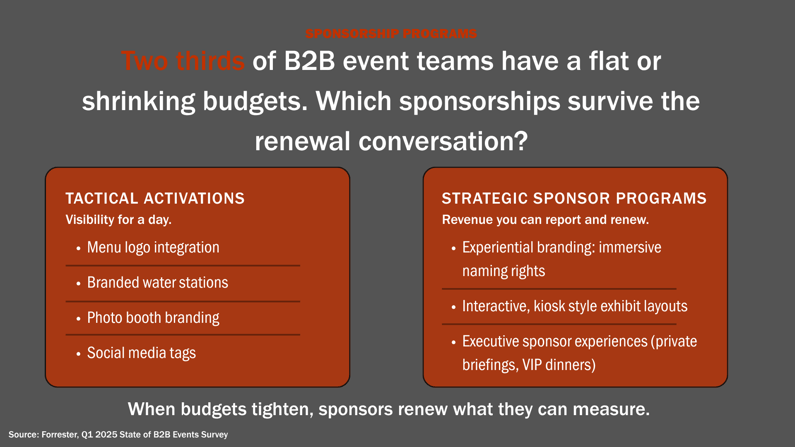
For the second consecutive year, two thirds of B2B event teams have seen their budgets stay flat or shrink. Sponsors expect more for their spend in that kind of environment, and conference organizers are under more pressure to prove the visibility and return they promised.
In this article, we'll walk through 10 sponsorship formats that work as building blocks for a sponsor program, the kind you'd assemble into bronze, silver, and gold tiers, negotiate into a sponsorship agreement, and report back on after the event.
Whether you're building your first tiered sponsorship structure or looking for new inventory to add to an existing program, these examples will help you think about sponsorship as a structured revenue line for your event.
Sponsorship programs are one piece of a larger conference build. See how GoGather manages conference production from sponsorship to show day.


1. Incorporate logos into your menu.
When it comes to event sponsorship, sometimes the best way to stand out is by being on the menu.
At a recent celebration event, we got creative with sponsorship by featuring the sponsor's logo in the food itself. Attendees enjoyed dishes and desserts with a branded touch—a fun way to keep the sponsor front and center.
But why stop at food? There's another opportunity to weave in sponsorship with drinks.
At one of our conferences in New York City, a sponsor made the most of this opportunity by creating a signature drink called the “ACME Manhattan.” We coordinated with the hotel to make it happen, and it was a hit!
Not only did the drink give the sponsor more visibility, but it also added a personalized touch to the event.
Don’t forget about mocktails—offering creative non-alcoholic options can be just as important. It ensures everyone feels included while still keeping the sponsor’s brand in the spotlight.
2. Sailing into sponsorships: Branded activities.
At a conference in Marco Island, Florida, we found a creative way to connect a company’s brand to the event’s tropical resort setting—by branding the sailboats for attendees. You can do the same with any kind of water sports like kayaks or paddle boards, especially during an incentive trip.
When planning your event, ask yourself: What unique aspects of your event venue can you tie to a sponsor's brand?
Whether it's sailboats, poolside cabanas, or even branded golf carts, find creative ways to weave sponsorship into the venue’s activities or offerings. This strategy can give sponsors a presence in a way that feels authentic to the setting.
3. Branded water stations.
A simple yet effective sponsorship opportunity is branding the water stations at your event.
Everyone needs to stay hydrated—especially during a hot incentive trip or a busy day at a conference.
As attendees stop to fill up their cups or refillable bottles, they’ll see your sponsor’s logo front and center on the container – an impactful way to tie the sponsor to something essential.
4. Photo booth fun.
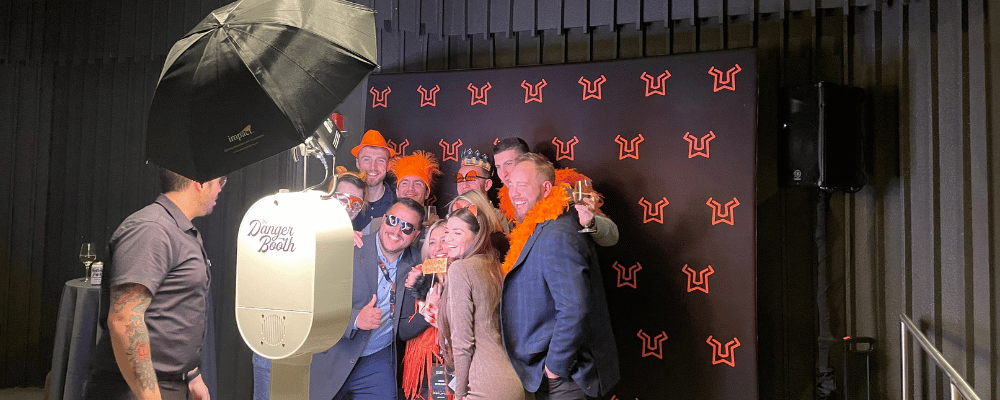
Photo Booths are a fantastic sponsorship opportunity. They’re not only a popular activity for attendees but also a smart way for sponsors to get noticed.
When people snap pics in your photo booth, they often share them on social media, which gives the sponsor’s logo some extra exposure.
You can even take it a step further by putting the sponsor’s logo on the backdrop, or even featuring your own logo to boost your brand’s visibility.
It’s a win-win for us at events: attendees leave with fun, memorable photos, and sponsors get their brand in front of a big audience.

5. Social media.
Social media is a powerful tool for branding at events.
Create a shareable image for attendees to post, like a graphic that says, “I’m going to [Event Name]” with a “Sponsored by [Sponsor’s Brand]” tag.
When attendees share these images, your sponsor's branding reaches more eyes as it’s spread organically across social networks. It’s a smart way to leverage attendees’ social media presence for additional exposure and build excitement around your event.
Related: 8 gamification ideas for your next conference.


6. Room drops / custom gifts.
Room drops are a clever way to integrate sponsorship into your event, allowing you to tailor gifts to the location of your gathering.
For example, during a conference we helped organize in the Caribbean, we gave attendees seashells and sunscreen—perfectly themed for the setting. You can easily sell this as a sponsorship opportunity by adding a sponsor’s logo to these items.
When planning your room drops, think about your strategy: Do you want to give these branded gifts to all attendees or just VIPs? The choice often comes down to your budget.
Either way, it’s a great way to enhance the attendee experience while giving your sponsors visibility.
Related: 10 unique gift ideas for your next corporate event.


7. Award sponsorship.
If your event includes a gala or awards presentation, consider offering sponsorship for the physical awards themselves.
It’s a great way for a sponsor to get their brand recognized as winners take home their trophies or plaques.
8. Interactive, kiosk style exhibits
Move sponsors out of a straight row of tables and into a kiosk style layout that gives each booth its own footprint and pulls attendees through the entire exhibit hall instead of just the first few tables near the entrance.
When our project management team built this kind of layout alongside four sponsorship levels for a client's national franchise convention, the sponsorships sold out and funded additional experiential elements at the event.
Curious how it came together? Read the case study here.
9. Executive sponsor experience.
For sponsors targeting your highest value attendees, build in closed door executive briefings, private dinners, or a curated one on one meeting program between sponsor representatives and VIP attendees.
These are relationship plays rather than visibility plays, and they command a premium tier price because of it.

10. Create branding experiences.
To get your sponsors more involved, focus on experiential branding.
For example, if a sponsor is behind a VIP experience or a golf event, find creative ways to weave their brand into the entire experience. Instead of just saying “Sponsored by [Your Company],” you could call it the “[Your Company] Golf Experience.”
It’s about adding depth and making the sponsorship more personal and memorable. Think about how you can tie the sponsor's name to different parts of your event, creating a more immersive experience for everyone.
Related: How to craft your conference sponsorship packages in 2025.
Let’s plan your next event.
Ready to turn your sponsor program into a revenue line your finance team trusts? Let's talk about your next conference.