Halfway through 2026, the picture for corporate conferences is coming into focus and the gap between events that land and events that don't is widening. With 85% of meeting professionals reporting record optimism this year and 40% planning to host more events, the bar for what makes a conference worth attending has never been higher. Here's what the data and our team's on-the-ground experience shows is actually driving that difference.
With new trends transforming how we plan and experience events (thanks to tech innovations and new engagement strategies) it's important to stay ahead of the curve.
What are the top corporate event themes and trends for 2026?
To help you create more dynamic and memorable events, we’ve rounded up 9 key trends and conference theme ideas to keep an eye on for in 2026:
| Number | Trend | Best for |
| 1 | Gamification | Competitive attendees & sales kickoffs |
| 2 | Wellness | Conferences & incentive trips |
| 3 |
Event vibe | Events lacking engagement |
| 4 |
Trending locations | Conferences, meetings, kickoffs |
| 5 |
Re-program formatting | Where events lack creativity |
| 6 | Re-design structure | Large conferences |
| 7 |
Focus on ROE and ROI | Where events seem stale |
| 8 | AI | Where events need a strategic edge |
| 9 | Personalization | Where attendee experience feels generic |
1. Gamification.
Are you finding it difficult to get attendees engaged at your events?
Traditional conference theme formats often miss the mark when it comes to keeping people engaged. That's where gamification comes in.
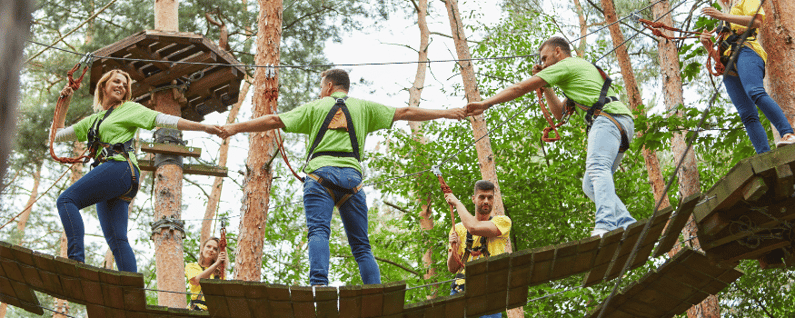
Gamification is becoming a go-to strategy at conferences for event planners lately, adding an extra layer of engagement for attendees. It's a fun way to motivate participation, from interactive games to rewarding achievements, and we're seeing it pop up more and more as a trend in event planning.
We've seen how well it works firsthand. Our Event Operations Manager, Shannon Fouts, helped a franchise client build gamification into their Las Vegas conference last May:
"Franchisees are competitive by nature, so we leaned into that. We worked with the client to build a points system in the months leading up to the event, where franchisees earned their spot by hitting training and sales goals. By the time we got to Las Vegas, the top four were competing live on stage for the win. It played out like a live game show, and it became the talk of the event."
We expect even more events to embrace this trend in 2026, taking attendee engagement to the next level. Check out these 8 gamification ideas for your next conference theme or corporate event.
2. Wellness.
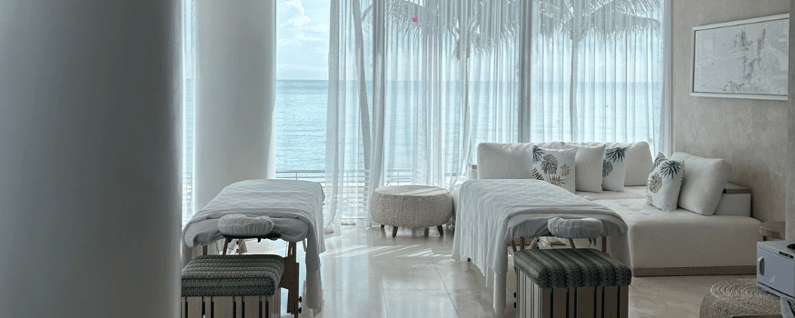
Wellness is set to be a major trend for 2026 conferences, and it’s about more than just physical health.
Companies are expected to show that they genuinely care for their employee’s overall well-being—mentally, physically, and financially.
We’re expecting to see more opportunities for attendees to focus on their health during events, whether it’s through exercise breaks or sessions aimed at helping people recharge, like guided meditation or mindfulness workshops.
As Dave Wagner, our President and Co-Founder, said
"Wellness is one of the most overlooked parts of building a conference agenda. Giving attendees time to get fresh air, exercise, and access to healthy food options matters more than people realize. When attendees are fueled and feeling their best, it leads to better conversations and better outcomes."
Companies are recognizing the importance of mental health and may offer sessions that encourage attendees to take proper breaks, hear from mental health experts, or learn simple ways to manage stress.
Financial wellness is another area that might become a big focus. Depending on the audience, there may be sessions on financial planning—like how to work with a financial advisor, save for retirement, or navigate uncertainties in the stock market.
These elements allow attendees to walk away with practical tools to improve their personal lives, not just professional insights.
Incorporating wellness initiatives shows that while the company’s goals are important, so are the people attending.
Related: Want your team to feel truly appreciated? Read this article about the top incentive travel companies.
3. Crafting the right event vibe.
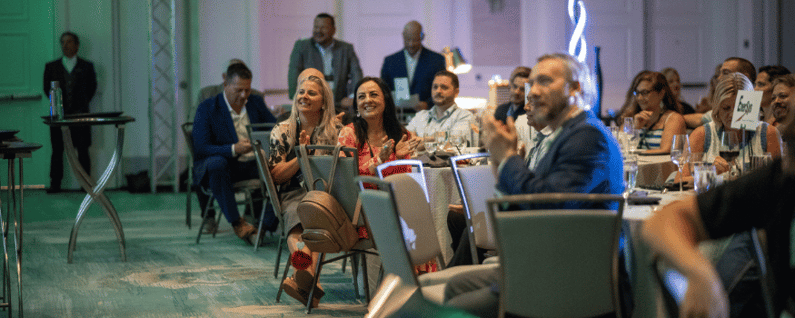
In 2026, we’re expecting to see a growing emphasis on the vibe of events—the mood and atmosphere event planners create.
Post-pandemic, people are more sensitive to these subtleties, so being intentional about your event’s vibe can set your gathering apart.
It’s the intangible element that can make attendees leave saying, “That was a great event,” even if they can’t quite put their finger on why.
Whether you’re aiming for a high-energy buzz, a calm and focused environment, or something in between, having a clear and purposeful approach to your event’s vibe can make a big difference.
Just like companies put thought into their culture and how they want to be perceived, you should do the same when shaping your event’s atmosphere. The right vibe can look very different depending on your industry — a trucking & transportation logistics event might call for an authentic, grounded tone that celebrates hard work and teamwork; a technology or SaaS conference may lean into sleek, future-forward energy; home services events often feel more community-driven and personable; and franchise gatherings thrive on shared purpose.
Discover how to set the right vibe for your conference theme and build a strong sense of connection and energy among your attendees.
4. Trending locations.
In 2026, we're anticipating a rise in popularity for a range of trending locations.
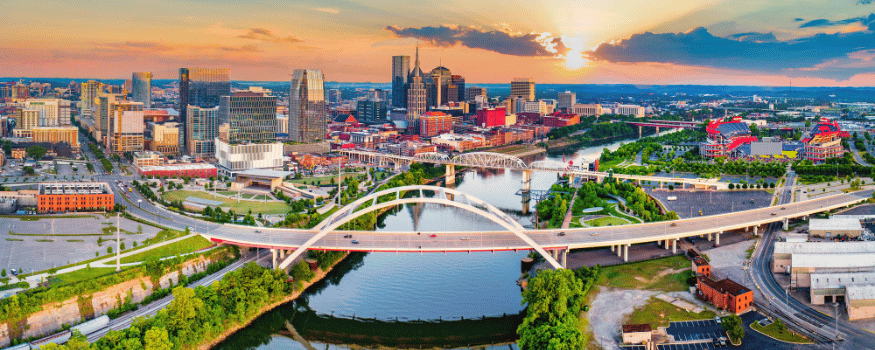
Cities like Nashville, Louisville, and Kansas City are catching attention, as well as warmer spots like Puerto Rico, Dallas, and various parts of the Southeast, including Atlanta and Orlando.
Nashville is a standout for a reason. Here's how our Project Manager, Sierra Gillis, puts it:
"Hosting corporate events in Nashville is great because the city is a destination attendees get excited about. Nashville has such a specific identity and culture that incorporating local flair and themes into your event is easy and memorable for guests. Think southern comfort food, line dancing lessons, songwriter team building sessions, and so much more."
As we head into the winter months, these locations become particularly attractive for those looking to escape the cold.
Keep in mind, you might find better deals and more availability in colder spots during the off-season. We know it can be tricky to balance weather and cost for your group.
Here are some tips on the top cities for hosting your conference, along with advice on how to choose the perfect destination for your next event.
5. Creative program formats.
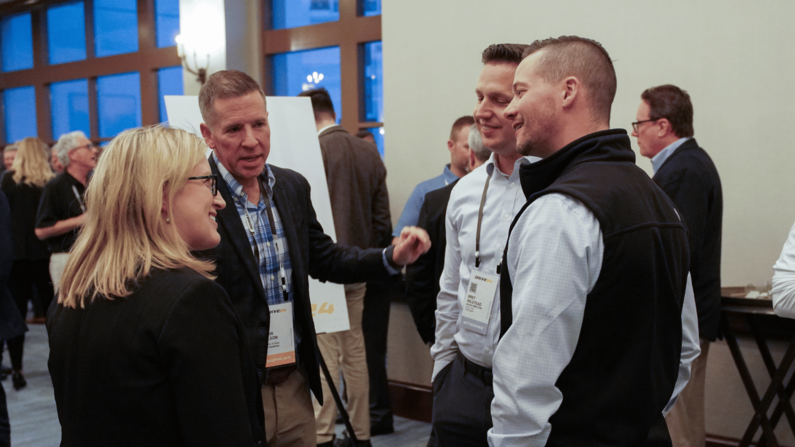
In 2026, we’re likely to see a shift toward more creative program formats, even in areas that traditionally haven’t been seen as creative.
According to Brian Kellerman, our CEO, the future of event agendas is all about efficiency and impact. In an article by MTL, he explains that instead of marathon sessions crammed into a single day, planners should focus on shorter content blocks, small group interactions, and engaging roundtable discussions—ideally hosted in standout spaces.
Expect a return to basics with more small group interactions, participatory elements, and roundtable discussions.
Industry research backs this up: sessions of 20–30 minutes consistently outperform longer formats for attendee engagement and retention, making the classic 90-minute keynote an increasingly hard sell.
Creative programming also means using your destination to your advantage. Our Event Operations Manager, Shannon Fouts, did exactly that on a recent incentive trip to Orlando:
"With Orlando right next to Disney, we created an exclusive third day for the top 16 performers. It opened with a golf tournament and ended with an off-site dine-around through Epcot, where these guests moved between restaurants and spent unhurried time with the C-suite. It was the kind of day people go home and brag about, which is how a trip like this builds its reputation."
Here are 23 creative and fun conference theme activity ideas to help spark some ideas.
6. Re-designed program structures.
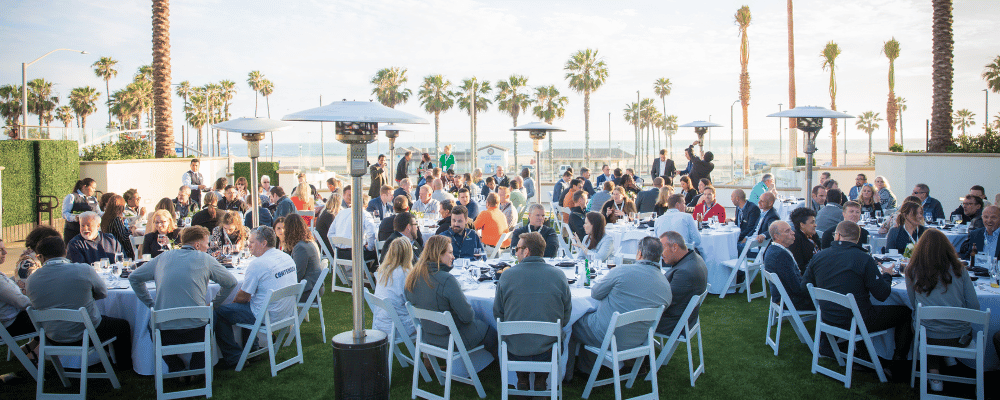
In 2026, we’re expecting a trend toward reevaluating program structures, especially when budgets are tight.
For example, instead of hosting one large sales meeting for 1,000 people, consider breaking it into four smaller regional meetings for 250 attendees each.
While this might mean leadership needs to attend more events, it could be more effective for your attendees.
When planning your next event, consider the best way to structure your programs to give attendees the best experience and results.
7. Focusing on event ROI.
Ever heard the saying, “If you don’t set a goal, you won’t hit it”? Well, this definitely applies when it comes to assessing the ROI of your conferences.
In 2026, paying attention to event ROI is going to be even more crucial. Here’s a simple guide to measuring the impact of your conferences:
- Define your vision: What are you trying to achieve with your event? How does this goal fit into your overall business objectives?
- Identify your core motivations: What’s driving your event? What are the key reasons behind it?
- Align metrics with objectives: Break down your goals into measurable components and track them.
It’s common to be unsure about the difference between quantitative and qualitative results. Revenue is important, but so is understanding how people feel in their roles and how their behaviors shift.
Both quantitative and qualitative data are crucial. Review them after your event and use those insights to make next year’s events even better.
Looking for a conference event management company to help you track your ROI and ROE? Here are the 15 best conference event management companies.
8. AI in events.
AI has moved from experimentation to expectation at corporate conferences. 95% of event professionals expect their organization's use of AI to increase in 2026, with 35% anticipating significant increases. Attendees are starting to expect it too, with 73% saying they expect in-person conferences to use modern event technology and 55% reporting the mobile event app can make or break their experience. Chances are, you've already experimented with AI tools for at least some aspects of event planning, but in 2026, the question has shifted from whether to use AI to how well you're using it.
Brian Kellerman, our CEO, sees a clear line between where AI helps and where people still need to lead:
"AI is a fantastic creative partner for brainstorming, ideation, and getting that first draft of a concept down fast. It does a lot of the heavy lifting on the front end. The piece people forget is that it still needs a human pair of eyes to edit, sharpen, and finalize. That human judgment is what takes an idea from good to great."
Beyond planning, AI programs can also help you visualize floor layouts and organize event spaces more effectively, taking some of the guesswork out of logistics.
Tools like Gamma are being used to create presentations and slide decks, while Midjourney is used to create event graphics.
Runway is making it easier to generate videos, images, and other multimedia content, and Suno is even helping to create custom event music.
As these technologies continue to advance, they’ll provide even more innovative solutions for crafting engaging conferences.
Virtual and augmented reality is another technology that's expected to become more popular for creating immersive experiences at your event, helping elevate the overall conference theme.
Want more ideas? Here are 6 interesting ways to use AI at your next corporate event.
9. Personalization as a baseline expectation.
Personalized event experiences used to be a differentiator. In 2026, they're the baseline.
Attendees now expect agendas, networking, and content to be tailored to them. Events that don't deliver feel generic by comparison, and that feeling shows up in whether people come back. According to the Freeman 2026 End-of-Year Trends Recap, 20% of attendees don't feel their objectives are being met at the events they attend. The events that earn a return visit are the ones that help attendees meet the right people, choose the right sessions, and find the right solutions.
What does great personalization feel like for an attendee? Brian Kellerman, our CEO, sums it up as recognition that anticipates what each person needs before they ask:
"The thing that creates a memorable experience is the moment people realize they're recognized. You walk up to the front desk and they greet you by name before you even hand over your ID. You sit down for breakfast and they already know your drink order. That's celebrity treatment. Think about how a headliner moves through a hotel: their room keys, their snacks, and their drinks are waiting for them when they arrive, all presented and ready. Nobody's chasing down what they need because it's already been anticipated, and that's the VIP treatment we want every attendee to feel."
The tools making this possible have matured quickly. Smart badge technology, AI-powered matchmaking, and dynamic scheduling now let enterprise teams deliver personalized touchpoints at scale without adding significant manual lift. At GoGather, we're seeing clients bring session design and attendee journey mapping into the conversation much earlier in the planning process. Trends like gamification and personalization only feel authentic when they're tied to a consistent visual and creative identity, so it's worth pairing them with dedicated event branding and creative work.
Want to see how this works in practice? Read how GoGather transformed a multi-city conference experience.
What are some incentive travel trends for 2026?
Curious about the top incentive travel trends for 2026?
From record burnout to high employee turnover, this year is set to make incentive trips an important business strategy.
But there are also important considerations around cost that are starting to reveal themselves in overwhelmingly large bills.
What event trends are you seeing?
As you plan your event this year, let us know what trending conference themes you're seeing and how we can help you plan for them. Let's chat about your upcoming conference or corporate event.