



Industrial Conferences: What's Worth Attending and Why
"Industrial conference" covers more ground than the phrase suggests. Search it and you'll find everything from Wall Street investor days at firms like Baird or Deutsche Bank to regional manufacturing trade shows to internal leadership summits companies run for their own teams. They're not the same event, and they don't serve the same audience.
Telling them apart usually comes down to two questions: who's putting it on, and who's speaking. A company or a bank hosts an investor day, and executives and analysts do the talking. The association itself hosts a trade or association conference, and the speakers are largely practitioners. One manufacturer hosts an internal event for its own people, and it usually won't turn up in a search at all unless that company published something about it afterward.
If you've never been to one, the shape is fairly consistent. Mornings run heavy on clinical content and CE credit sessions. Afternoons split between smaller breakouts, an exhibit hall stocked with device and pharma vendors, and association business (elections, bylaw updates, the stuff members complain about but still show up for). Evenings are networking, sometimes structured, often not.
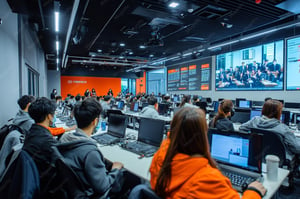
Investor-focused industrial conferences
These are built for analysts and institutional investors, not plant managers. Company leadership presents strategy and financials, investors ask questions, and the whole thing runs on a tight, formal schedule. If you're in manufacturing operations rather than finance, these aren't the conferences you're looking for, even though they show up first in a lot of searches.
There's a reason for that ranking. A publicly traded company's investor day gets covered by financial press and generates far more online coverage than a members-only trade show ever will, so a generic search for the phrase surfaces the finance events first no matter who's typing the query. The volume of coverage isn't a signal of relevance to a plant manager, just a signal of who has a press office.

Trade and association conferences
This is the more useful category for most manufacturing professionals: association-run events built around a specific sub-industry (packaging, automation, materials), with an exhibit floor, technical sessions, and the kind of peer conversations that don't happen anywhere else. These run on predictable annual calendars and reward people who show up consistently, since the value compounds over multiple years of relationships.
These sub-industries are narrow enough that the same core group of people tends to show up year after year, which is exactly why the compounding works. Skip a year and you're not just missing sessions, you're catching up on relationships that everyone else in the room kept building without you.
Some of that comes down to permission. A plant engineer can't call a competitor's plant and ask how they solved a packaging-line problem, but the same two people can compare notes over a coffee break at the association's event without either side treating it as competitive intelligence. That informal exchange is a big part of what the annual calendar is selling.
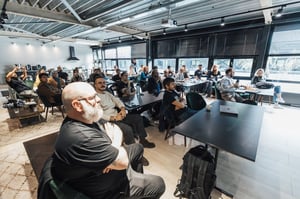
Internal industrial conferences
The third category is the one companies run for themselves: sales kickoffs, leadership summits, plant-manager gatherings. These don't show up in a search the same way, but they're where a lot of manufacturing companies actually spend their events budget, and they're where the biggest planning lift lives.
That lift is real because nobody else is doing the work. A public trade show hands an attendee a badge, a hotel block, and a printed agenda already built. An internal industrial event starts from zero: pulling people off the floor across multiple shifts and multiple sites, then building a venue, a schedule, and a program from scratch instead of just buying a booth at someone else's show.

Planning one of these instead of attending
If you're the person who has to build one of these internal industrial events, not just show up to one, the planning challenges are real: dispersed teams across shifts and regions, content that has to land with a hands-on workforce, logistics that don't fall apart the moment something changes. That's the work GoGather does for manufacturing companies.
Coordinating shifts and regions means building the event around a plant that doesn't stop running, which is a different planning problem than blocking off a ballroom for three days. It touches timeline creation and management, contract negotiation with a venue that has to hold space around a production schedule, and risk mitigation built to keep a change on one shift from taking down the whole event.
How GoGather supports you
- Venue & accommodations sourcing
- Logistics management (on and off-site)
- Budgeting & reporting
- Contract management & negotiations
- Food & beverage
- Vendor coordination (A/V, entertainment, and more)
- Onsite support
- Post-event support