Healthcare events, planned by people who respect how complex your world is.
Between clinical schedules, multiple stakeholders, and zero room for error, healthcare events aren't like other events. GoGather brings the same rigor to your event that your organization brings to patient care.
Top brands trust GoGather.


Why healthcare organizations choose GoGather
Healthcare events bring together people with very little room in their calendars: physicians, administrators, department heads, and frontline staff who are already stretched thin. We plan around that reality instead of ignoring it.
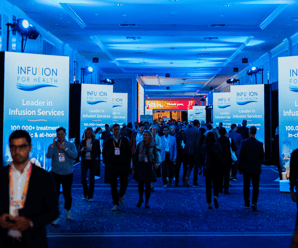
That gets harder as the organization gets bigger. A single hospital might need a conference date to clear service line schedules, on-call rotations, and shift coverage before anyone can commit to it. A multi-site health system has that same problem at every campus, times the number of departments that need a say, plus a marketing or communications team measuring the event against its own goals on top of that. Generic event planning treats that complexity as something to work around. We treat it as the starting point: the planning calendar, the stakeholder list, and the sign-off process get built around your organization's real structure from the first conversation, not retrofitted once a date is already on your calendar.
Your sign-off process usually means more than one signature. A department head might control the budget, but a system-level marketing team may need to approve messaging, and facilities has to confirm a venue works for a group your size. We track every one of those approvals in one place, so your team never finds out at the last minute that a stakeholder never signed off.
- A planning process built around clinical schedules, not the other way around
- Deep coordination across multiple stakeholders and departments
- Transparent budgeting and reporting your leadership can stand behind
- A dedicated team that acts as an extension of yours, not a vendor you have to manage
Events built for how healthcare actually works

Multi-stakeholder coordination.
Healthcare events rarely have one decision-maker. We coordinate across clinical leadership, administration, and event sponsors so nobody's priorities get lost in the process.
Your clinical leadership wants the agenda built around what their people need to walk away with. Your administration wants a budget that holds up under review. Your sponsors want visibility that doesn't feel like an ad wedged into the program. None of those priorities are wrong on their own, and none of them disappear just because they're inconvenient to reconcile with each other. We run one integrated timeline and a single point of contact across all three groups, so a decision gets made once instead of re-argued every time a new stakeholder joins the call.
That single point of contact matters most when plans change late, and in healthcare, they often do. A department head's schedule shifts, a sponsor asks for a different placement, or a speaker cancels. Instead of that news bouncing between inboxes and losing time in translation, it reaches one team that already knows the full picture and can adjust the plan without starting the conversation over.

Schedule-aware planning.
Clinical staff can't just block a week off. We build agendas and logistics around the real constraints of healthcare schedules, shift coverage included.
A physician with a full patient panel can't clear a week the way a corporate sales team can. Your shift-based staff have coverage requirements that don't bend for a conference date. That's part of why we recommend starting the planning timeline six to twelve months out for most conferences, and nine to twelve for anything multi-day, multi-track, or destination-based: the extra runway makes room for the schedule negotiations healthcare events need that other industries don't. From there, we build session blocks and travel windows around your staffing reality, not a generic template.
That planning runway also leaves room for slack a compressed schedule never allows: a later start time on day one for anyone coming off a shift, buffer between sessions instead of a day stacked back to back, and a plan for what happens if a key attendee gets pulled back to a unit at the last minute. None of that is possible when the schedule comes together in a rush.

Meaningful content, not filler.
Your attendees don't need another generic keynote. We help you build sessions that respect their time and give them something they'll actually use.
Time away from patients or a unit is time your organization pays for twice: once for the event itself, and again for the coverage back home while people are gone. That math changes what belongs on an agenda. We push past the generic keynote slot and build sessions around what your specific audience, whether that's department heads, frontline staff, or a mix of both, will carry back to their day-to-day work.
That starts with the agenda, not the room block. Before filling session slots, we ask what your attendees need to walk away knowing or able to do, then build the program around that instead of reaching for a standard keynote-panel-breakout format because it's familiar. A shorter, sharper agenda that respects the time your people gave up beats a longer one padded out to fill the day.

Recognition that matters.
Healthcare work is demanding. We help you build in the kind of recognition and connection moments that remind your teams why the work matters.
Recognition that feels like an afterthought, a certificate handed out between agenda items, tells your team the opposite of what you meant it to. We build recognition and connection into the event itself: moments that give people space to be present with each other, not just clock in for a keynote and clock out. For teams that spend most of their year in high-stress, high-stakes environments, that time together does work a group email never will.
That can be as visible as a dedicated recognition moment on the agenda or as simple as protecting real unstructured time instead of scheduling straight through lunch and every break. Either way, it goes into your agenda from the start rather than getting added if there's time left over, because on a packed clinical conference schedule, there usually isn't.

Full-service medical conference management.
Medical conferences bring their own logistics: continuing education tracks, an exhibitor floor for device and pharma partners, and attendee lists that span physicians, administrators, and vendors who all need something different from the agenda. We manage the full event, not just the room block, registration, exhibitor coordination, session logistics, and the on-site details that keep a clinical audience's actual schedule in mind.
Each of those groups needs something different out of your event. Physicians want continuing education content that respects their time and their expertise. Exhibitors want booth traffic and a floor plan that doesn't bury them next to the coat check. Administrators want a budget and a run of show they can defend afterward. We build one event that works for all three at once: exhibitor logistics that drive real traffic instead of just filling square footage, session scheduling that accounts for clinical attendees who may need to step out and back in, and reporting your leadership can use.
Exhibitor logistics for a medical conference come with their own layer of complexity: booth assignments, floor traffic patterns, and the sponsor commitments that need to work alongside the educational program instead of competing with it for attention. We manage both sides as one event instead of treating your exhibitor floor as a separate project bolted onto the conference.
Registration works differently for each group too: physicians moving between sessions, exhibitors who need booth and badge logistics handled separately, and administrators who need visibility into who showed up at your event. We set up registration once, built around those different paths, instead of forcing every attendee type through the same generic form.
Pharmaceutical event management.
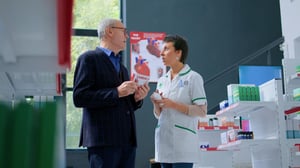
Pharmaceutical meetings bring their own list of considerations: multiple internal stakeholders, external partners, and an audience that expects everything to run precisely on schedule. We bring the same coordination and attention to detail here that we bring to any complex healthcare event.
Internal stakeholders usually means sales leadership, medical affairs, and marketing all weighing in on the same agenda, each with a different priority for the room. External partners add another layer: speakers, vendors, and site logistics that all have to land on schedule, with little room to move one piece without the rest of the day feeling it.
Precision scheduling also means building in the buffer to absorb the inevitable: a flight delay, a speaker running long, or a last-minute change from internal leadership. We plan for that upfront so a small slip in your agenda doesn't turn into a scramble.
Venue selection carries its own weight here too. Your pharmaceutical meeting often mixes public-facing sessions with closed working meetings that need real separation, not just a door that shuts. We factor that into site selection and room layout for your event from the start, instead of treating those assignments as an afterthought once the venue is already booked.
Real experiences. Lasting impact.
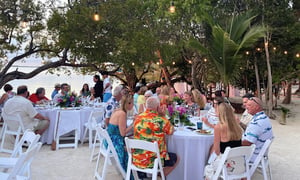
How a franchise turned an incentive trip into a true reward.
This franchise group wanted to celebrate its top performers with an incentive trip that actually felt like a reward. Partnering with GoGather, they hosted a relaxed, flexible getaway at Baker’s Cay Resort in Key Largo that balanced connection, free time, and unforgettable moments.
Read More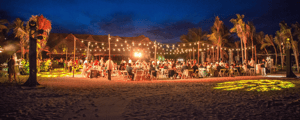
An unforgettable President's Club trip
Our client is a world leader in science, with more than 50,000 employees globally. For their President's Club event, the team was looking to create a unique experience for their well-traveled team.
Read MoreHow GoGather supports you
- Venue & accommodations sourcing
- Logistics management (on and off-site)
- Budgeting & reporting
- Contract management & negotiations
- Food & beverage
- Vendor coordination (A/V, entertainment, and more)
- Onsite support
- Post-event support