
After 15+ years helping companies plan sales kickoffs and corporate meetings, I’ve learned a hard truth: Most events don’t fall short because the goals lacked ambition.
They fall short because no one carried those goals into the on-site experience.
Here’s how to ensure your corporate event goals shape every decision in the room, and what that discipline looks like in practice.
Quick summary.
In this article, I’ll walk you through six practical steps that will help you turn your biggest corporate goals into clear, on-site decisions.
| Step | What you’ll focus on |
Why it matters |
| 1 | Get clear on what really matters | Your top priorities guide every other decision. |
| 2 | Translate vision into experience | Format and flow determine whether your message sticks. |
| 3 | Narrow your focus | Fewer priorities create stronger impact. |
| 4 | Build a strong (not packed) agenda | Attention and retention depend on structure. |
| 5 | Make intentional budget tradeoffs | Protect what matters most and spend with purpose. |
| 6 | Accept thoughtful pushback and redirection | Smart adjustments protect your outcome and investment. |
Let’s dive into how you can make sure your agenda, budget, and overall event experience stay aligned from start to finish.
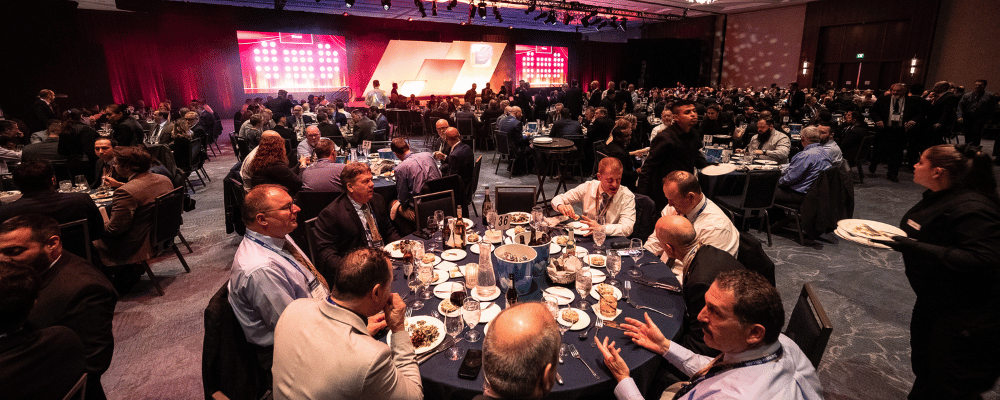
1. Start by getting clear on what really matters.
You may not walk into planning with perfectly worded objectives. More often, you have priorities and phrases:
- “We need more networking.”
- “This has to feel more valuable.”
- “Our tradeshow feels stale.”
- “We need stronger alignment.”
Those phrases are important and signal what your event needs to accomplish beyond filling an agenda.
If networking is a major goal for you, for example, it can’t just show up as a cocktail hour at the end of the day. It has to be designed intentionally into the experience.
Related: Here are 10 networking formats for when your attendees hate open networking.
What this looks like in practice.
If networking truly matters, you might:
- Build a central networking hub inside your tradeshow floor
- Place food and beverage strategically to draw people together
- Position key internal leaders in high-traffic areas to spark meaningful conversations
- Create structured discussion formats instead of leaving interaction to chance
When you intentionally design for the result you want (instead of hoping it happens on its own), your attendees will feel the difference. That’s the first step in translating ambition into execution.
Related: Here are 23 creative and fun conference activity ideas for 2026.
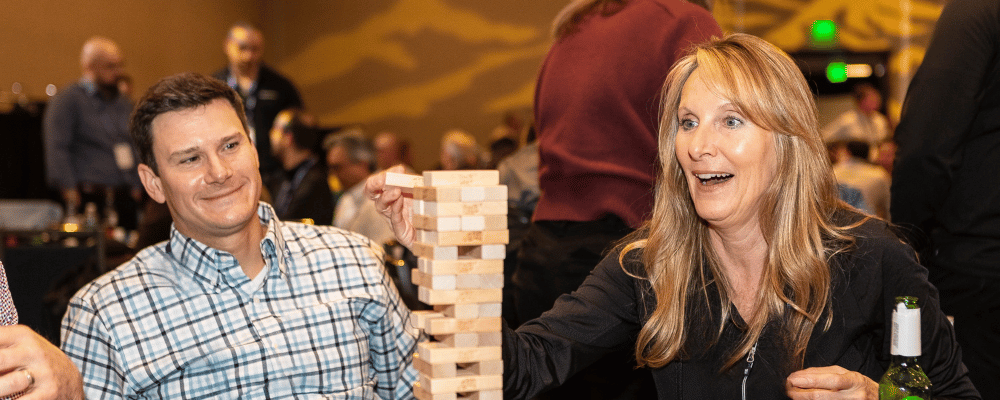
2. Move from vision to experience.
When you say you want revenue growth, culture shift, expansion, or retention, the next question is: how should that feel to your audience?
Because your business goal is not the same as your attendee experience.
If your plan is to communicate those goals during a long general session, you risk losing attention. People want to move, and they want to talk to each other. They want to participate in the message, not simply hear it.
Start with better design questions:
- How long can your attendees realistically focus?
- Where do they need movement?
- When do they need conversation?
- How do you reinforce your messaging outside the stage?
Engagement requires structure.
Instead of long workshop blocks, you might implement rotating micro-sessions where attendees move every 15 to 20 minutes. That format keeps energy high and improves retention because people aren’t sitting still for hours.
Instead of leaving networking to chance, you might assign discussion tables at lunch or design small group breakouts that encourage peer learning. These adjustments may seem small, but they directly support your larger business objective.
The format becomes part of the strategy.
Related: Is your annual conference starting to feel a bit stale? Here are some creative breakout session ideas to incorporate.
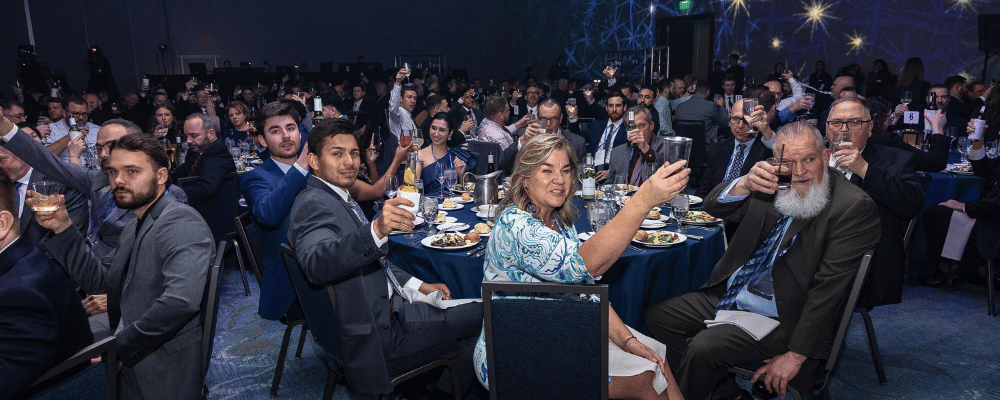
3. Narrow your focus before building the agenda.
One of the biggest planning traps is trying to accomplish everything in one sitting.
Growth. Culture. Recognition. Product launches. Training. Networking. Recruitment.
If every objective is urgent, your agenda becomes overloaded. And overloaded agendas rarely deliver impact. Before you build the experience, identify your top two or three outcomes.
When your top couple of event priorities are clear, your planning becomes easier:
- Your theme has direction
- Your breakout topics make sense
- Your budget decisions become intentional
- Your messaging stays consistent
Theme, when done well, reinforces your objective.
For example, if your focus is teamwork and performance, your theme might lean into sports language. Your speakers might reference working together, playing your position, and building momentum. Your evening experience might subtly echo that message through interactive environments.
When the thread is consistent, the message sticks better with attendees.
Related: Need help brainstorming? Here are some sales kickoff themes for your next event.
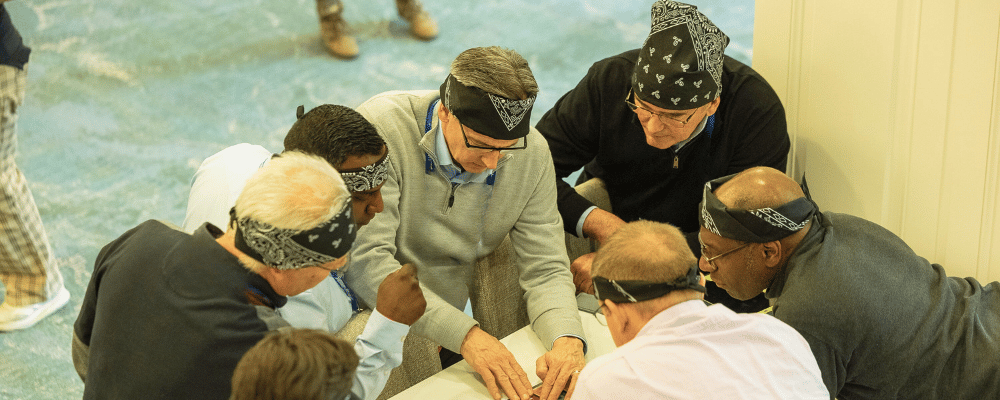
4. Build strong agendas, not packed ones.
There is a difference between a full agenda and a strong agenda.
A packed agenda checks boxes. A strong agenda supports attention, learning, and connection.
If your goal is alignment but your attendees are rushing from one ballroom to another without time to process, your message won’t land.
If your goal is connection, but there’s no protected time for conversation, networking won’t happen.
Strong agendas account for:
- Attention span
- Energy cycles
- Realistic transition times
- Downtime for reflection
- Space for informal connection
People can’t retain information when they’re overloaded. They can’t engage when they’re exhausted. So, designing with discipline protects your outcome.
Related: If your attendees are burned out, your agenda might be the problem. Here’s what to rethink and how to fix it.
5. Stay grounded with your budget.
Excitement builds quickly in event planning (that’s a good thing). But budget clarity keeps your decisions aligned with what matters most.
You may want premium F&B, high-impact production, custom décor, and a well-known keynote speaker. All of those are possible, but not always at the same investment level.
One helpful approach is evaluating “good, better, best” options in each event category:
- Production
- Catering
- Décor
- Entertainment
We use this tactic to put three options on the table, giving clients clarity around their priorities and tradeoffs.
Related: Not sure how your numbers compare? Here are budget benchmarks to guide your next conference.
Ask whether it is worth the budget.
For example, if a celebrity keynote speaker is your top priority, you may choose to simplify décor. You might adjust your menu selections. Or you might reduce custom-built elements.
Don’t look at it as “downgrading the event experience”. When you’re clear on your priorities, every decision becomes more intentional, and that’s what makes you a more strategic decision maker.
Related: Facing budget constraints? Here are expert tips for managing a tight event budget.
6. Expect thoughtful pushback.
You won’t always hear a direct “no.” But you should expect informed guidance from your planning partner. Pushback usually comes down to time and logistics.
For example, on paper, your agenda may look clean. But when you physically walk the venue and test the flow, new realities emerge:
- The rooms are farther apart than expected
- The transition time is too tight
- Attendees will bottleneck at escalators
- Signage or staffing adjustments are required
One of the most valuable exercises you can do is walk your proposed agenda onsite before the event. Move from space to space as if you’re an attendee (this is when friction becomes visible).
Sometimes, pushback protects you from unnecessary risk.
Related: Got questions? We’ve got answers. Here are responses to your biggest event planning questions.
When redirection strengthens the outcome.
Here’s a recent example where a last-minute shift on-site changed the outcome for the better.
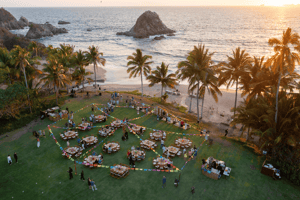
The original plan was to host a client’s final conference celebration outdoors on a large lawn. On paper, it sounded beautiful. But as we looked closer, a few concerns started to surface. The forecast showed a strong chance of rain, and the lawn was much larger than what the planned activations could realistically support within the approved budget.
If we had continued with the outdoor setup, the risks were clear:
- Weather disruptions (60% chance of rain) that could interrupt or shut down the evening
- Outdoor noise restrictions that would have forced the party to end by 10:00pm
- Energy getting lost in a space that felt too spread out for the group size
- Additional staging and setup costs required for an outdoor build
Instead, our planning team recommended moving the event indoors to a ballroom that already had a built-in stage and controlled lighting. While it initially felt like stepping away from the original vision, the shift ultimately strengthened the overall experience.
The indoor space created a more connected atmosphere, allowed the celebration to continue until midnight, and eliminated the added cost of constructing staging outside. What first felt like a compromise became a smarter decision that protected both the guest experience and the event budget. A win-win!
Related: Is site selection causing headaches? Here’s the honest truth about the process. It’s more complex than most teams expect.
My advice as you plan your next event.
Slow down before filling in your agenda.
It’s easy to repeat last year’s structure because it feels efficient. It’s harder to pause and ask whether that structure truly supports your current goals.
Before you dive into logistics, ask yourself:
- What are the two or three outcomes that matter most?
- How should attendees feel when they leave?
- What behaviors are we trying to influence?
- Where will our budget have the most impact?
You’re investing significant resources in planning an event. And, you’re asking people to step away from their daily work and personal lives to attend it.
That deserves thoughtful design.
Related: Not sure where to begin? Here are 10 practical steps to start planning your next conference with confidence.
Ready to plan your next event?
If you want your budget to work harder and your onsite decisions to clearly support your bigger goals, our team would love to help.
Let’s talk about what you’re trying to achieve and build an experience that moves your organization forward. Schedule a time to connect with us.